| Home |
| Documents |
| Order code |
| Gallery |
| Anecdotes |
| Glossary |
| Contact details |
Overview
The images shown here have been collected from a variety of sources. In some cases, the original owner has not been identified, or cannot be contacted. If anyone can lay claim to a particular image, and wishes it removed, they are welcome to make contact. If anyome wishes to amplify a description, please make contact too.
Note that most peripherals were common across the range, but they are often shown here under the system with which they were photographed.
General
These images are not tied to a particular model or system, or the system cannot be identified.
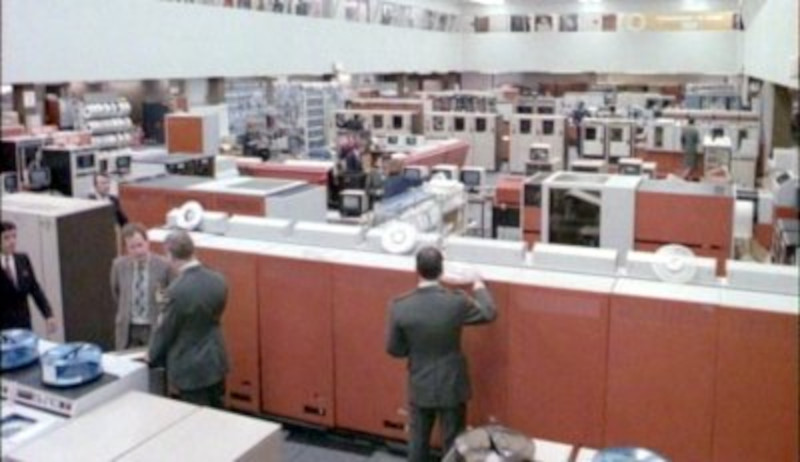
Machine hall at ICL Bracknell
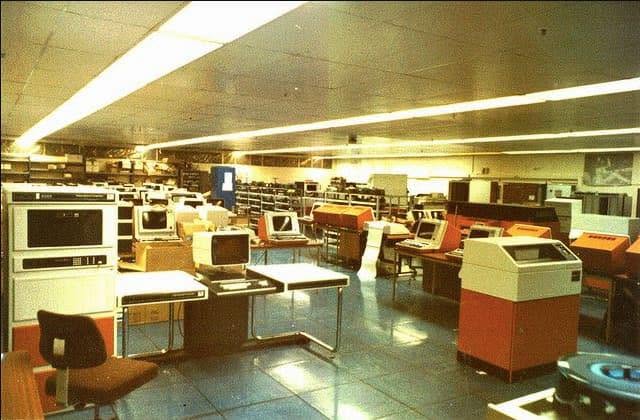
Machine hall at ICL Feltham (FEL01).
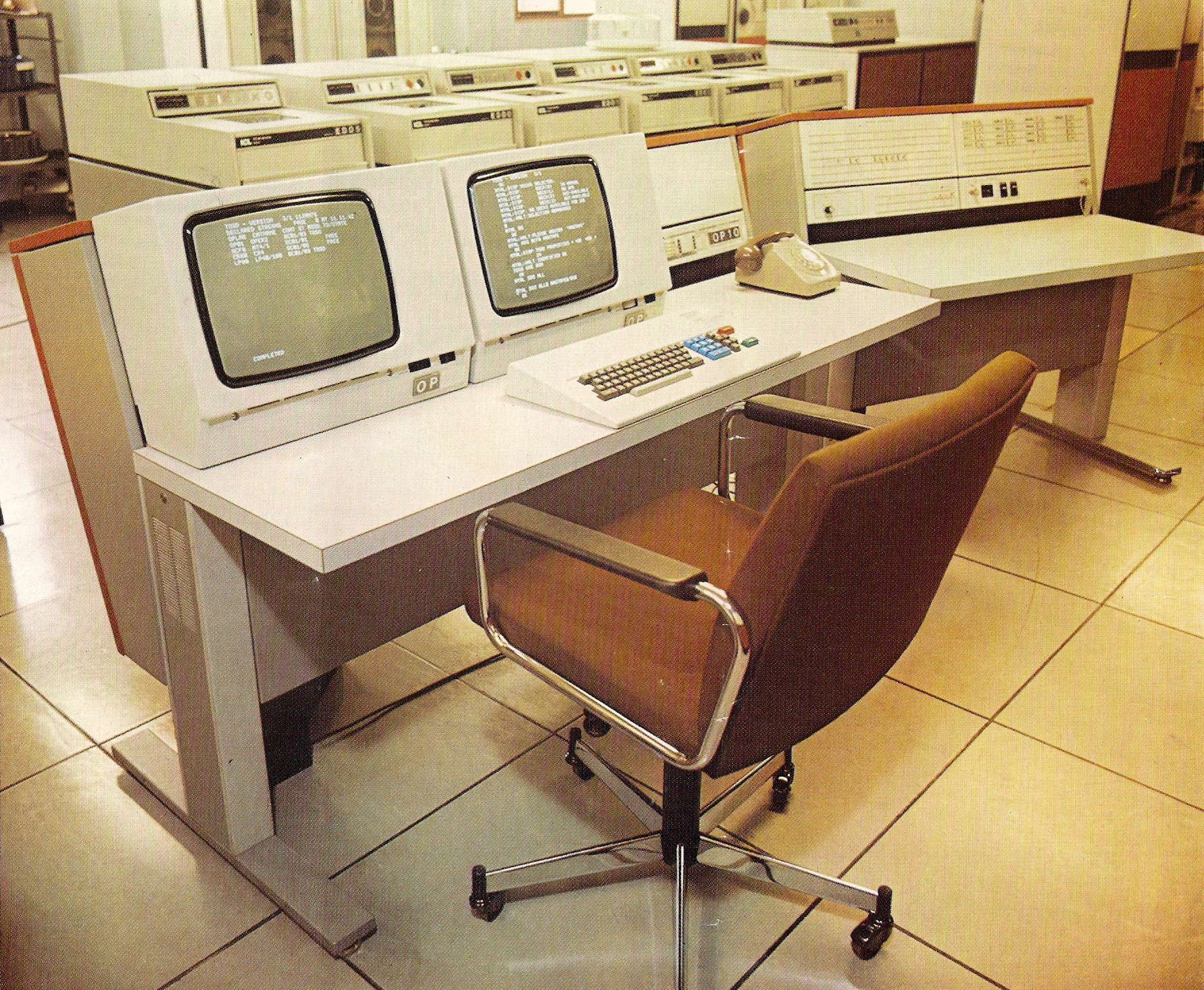
A typical two-screen OPER (operator station), with a system (re)configuration panel to the right. The chair is a standard one, supplied with the OPER. Six disk drives are in the background.
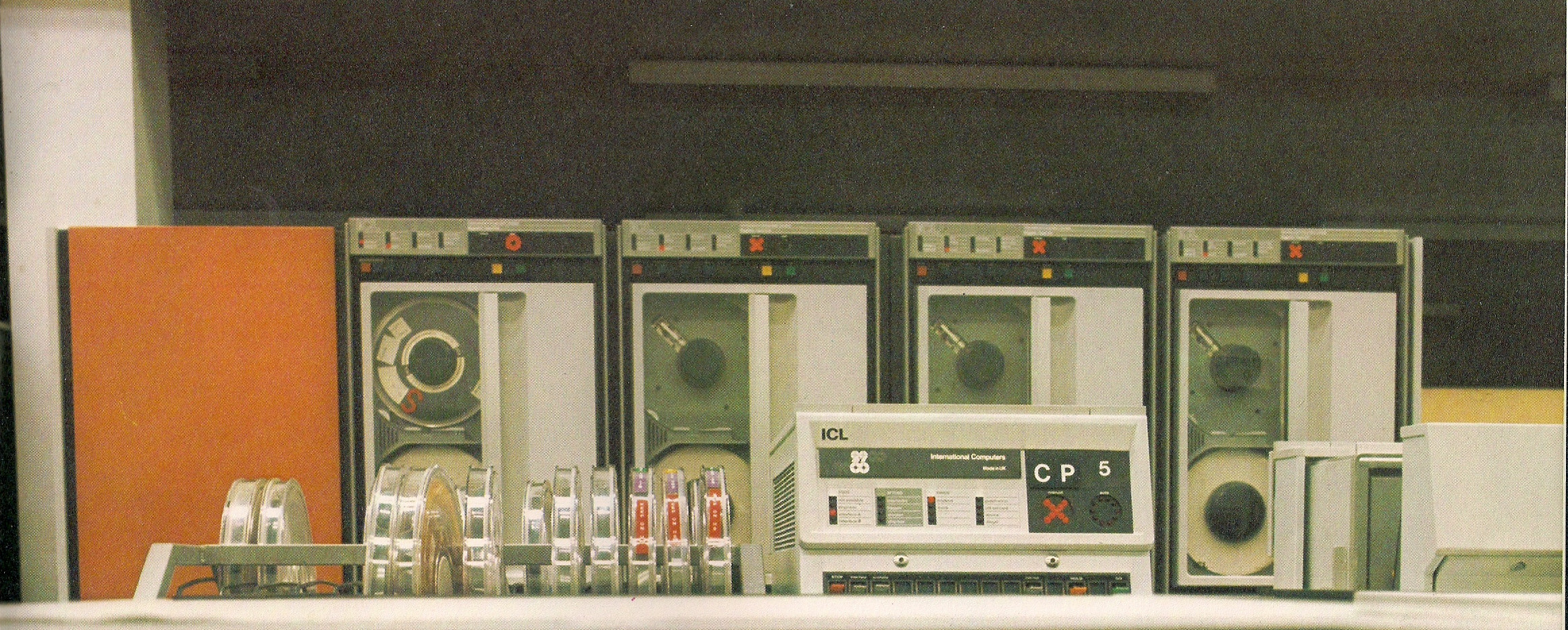
A card punch (80 column cards) with tape drives in the background.
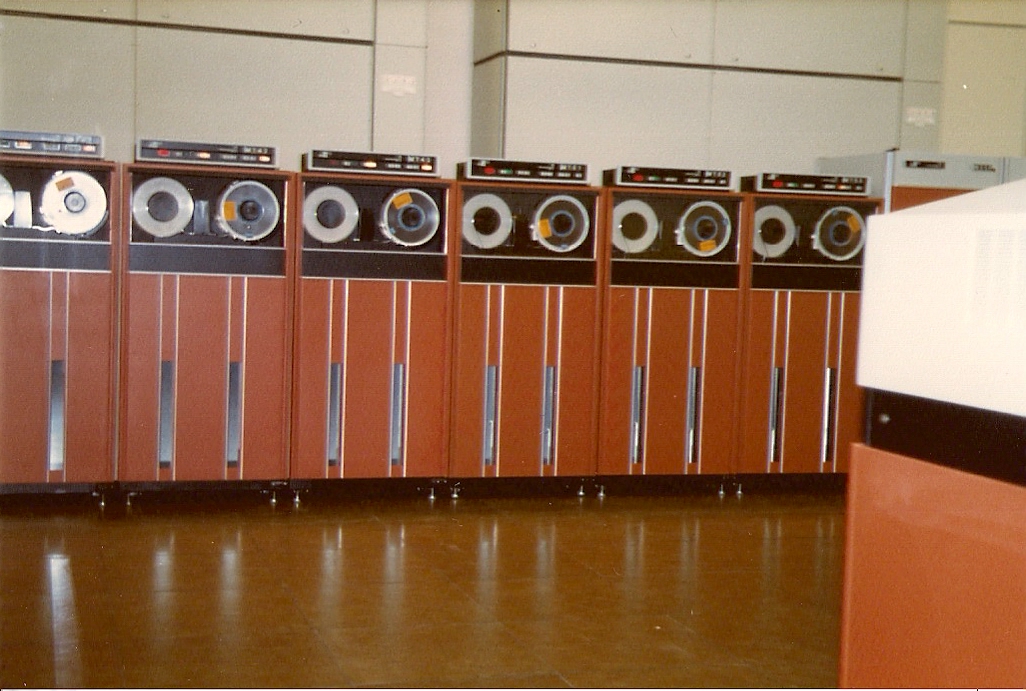
A splendid bank of tape drives.
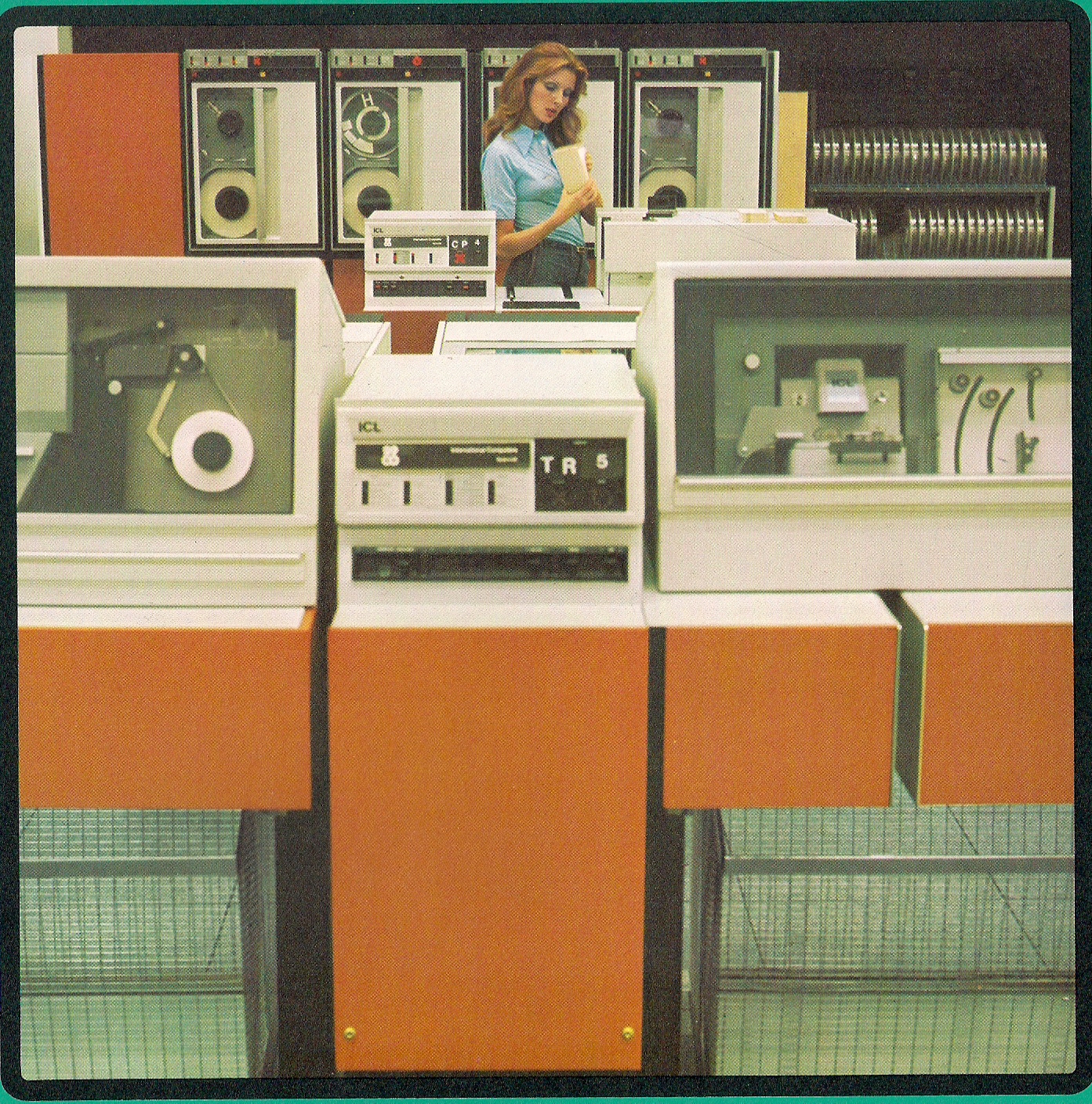
A paper tape station (reader and punch), with card punch and tape drives in the background.
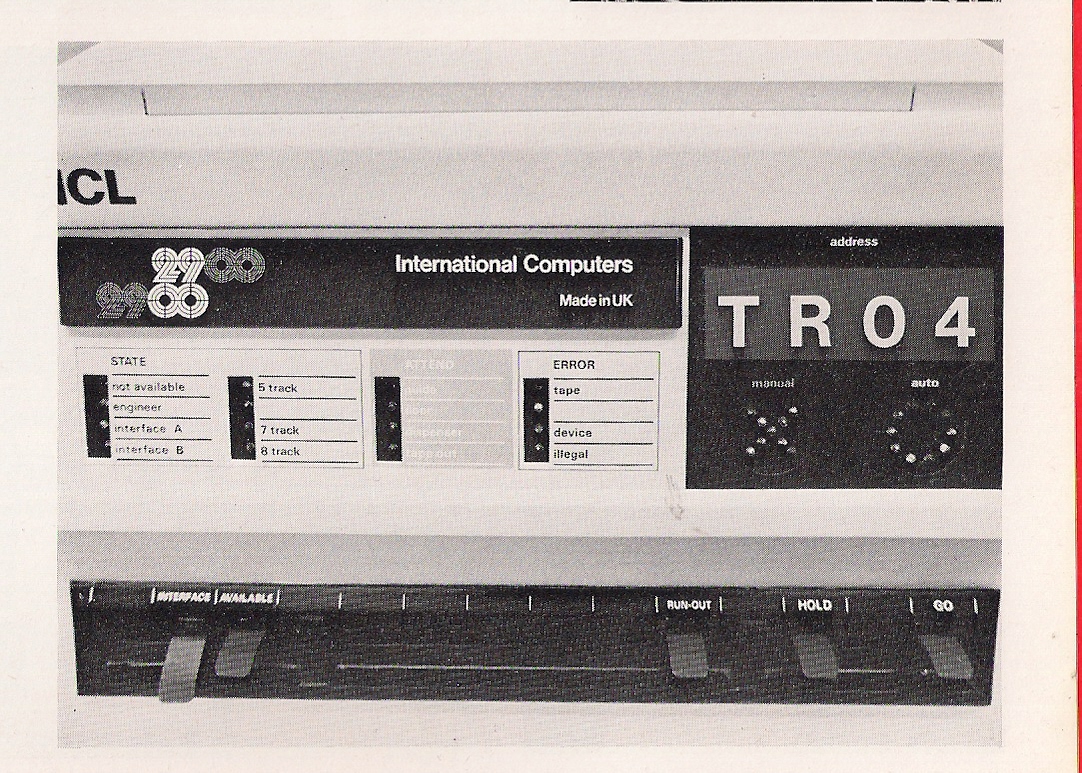
Monochrome close-up of the control panel for a paper tape reader. All peripherals used the same overall layout, with variations as appropriate. The rather over-engineered manual/auto LED displays were designed to be clearly seen at a distance.
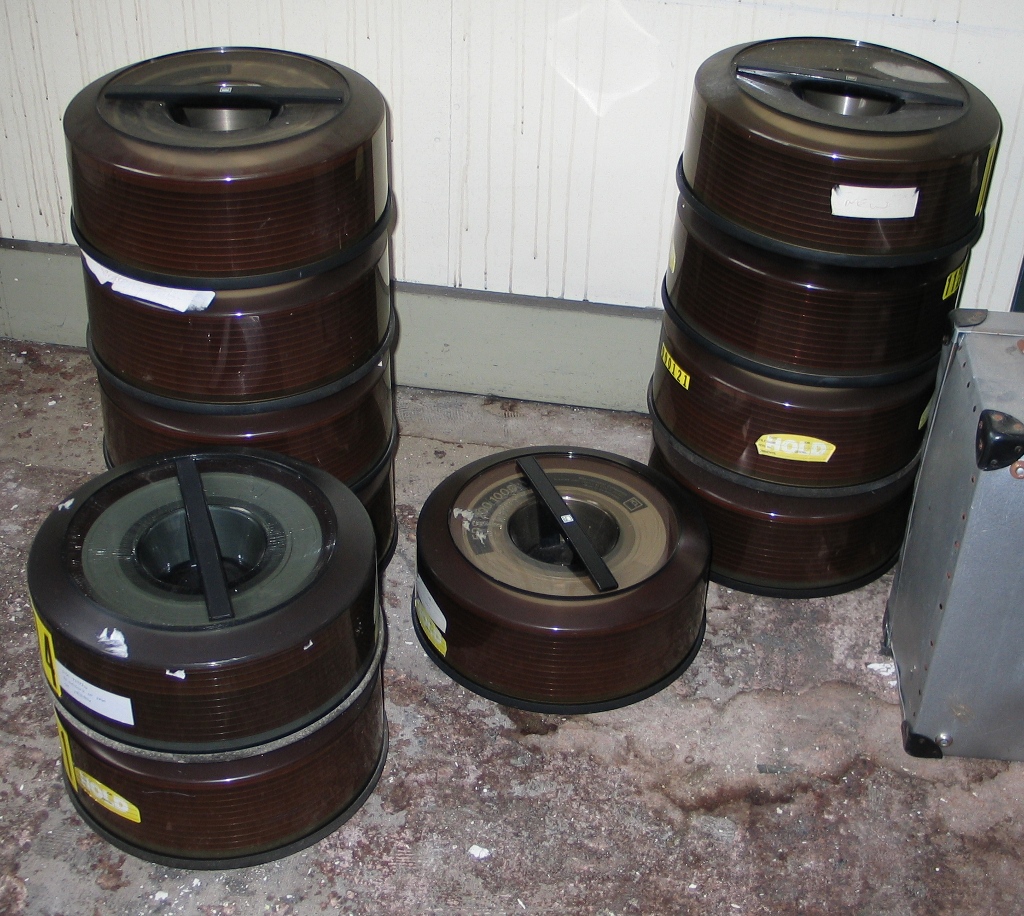
Exchangeable disk packs, probably EDS100 or EDS200.
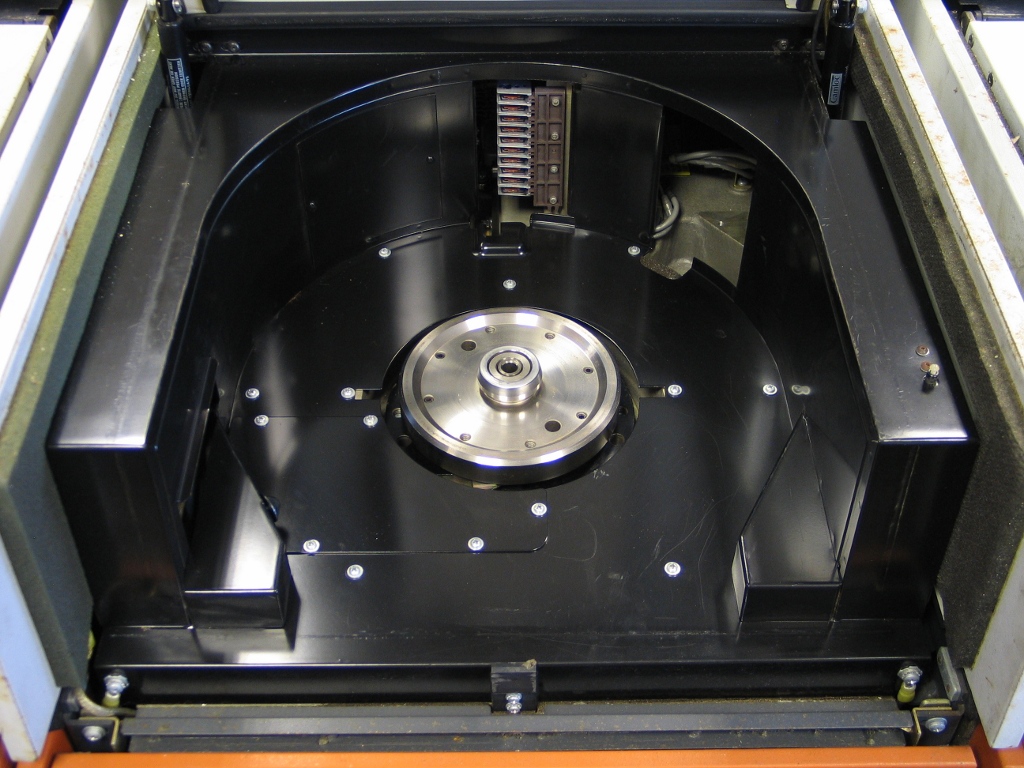
Disk drive, lid open, showing where the disk pack goes.
2960
The 2960 (also known internally as the P2) was a P-series machine, microcoded. It was relatively low powered.
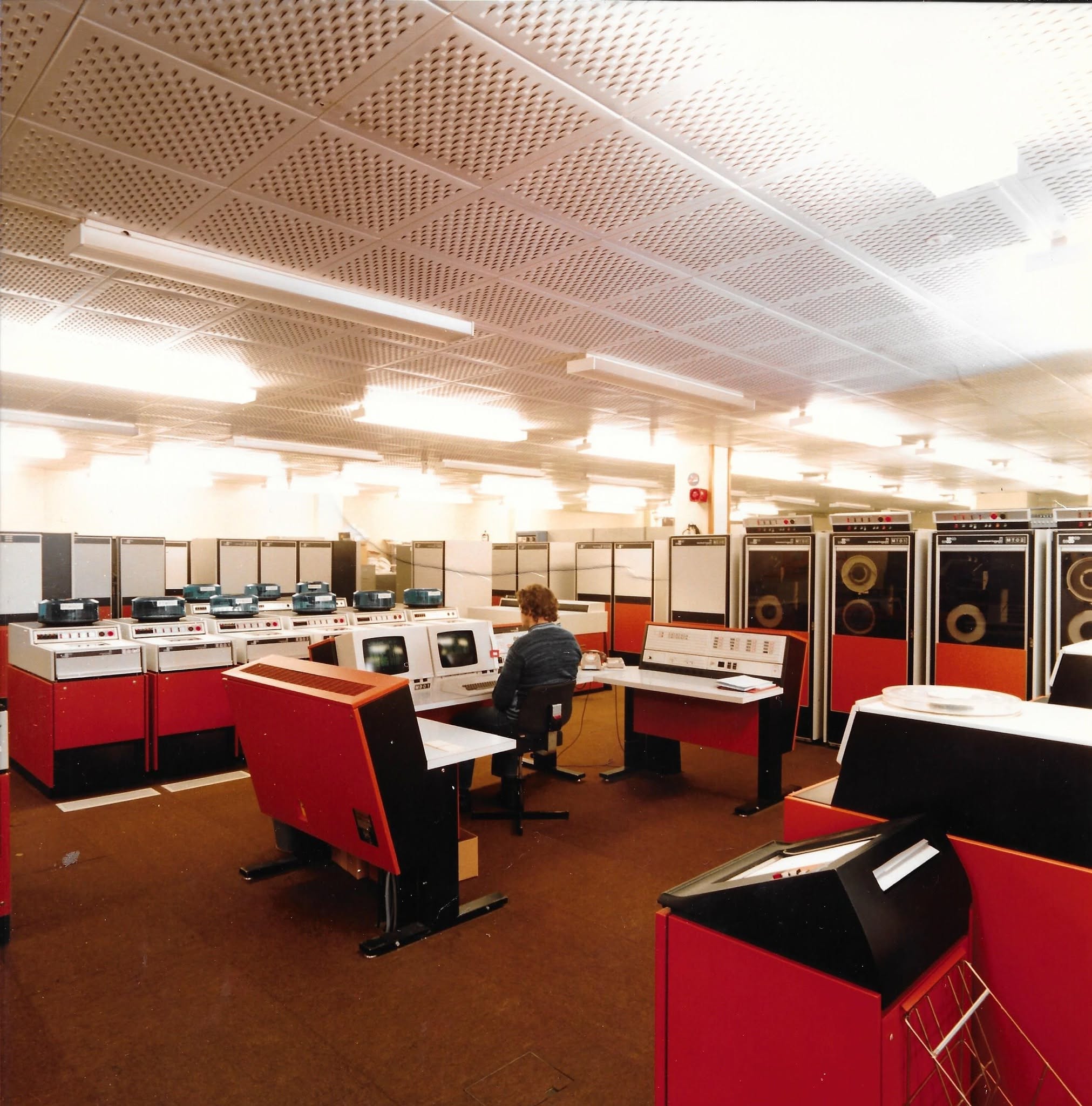
This shows the 2960 at the Flight Test Department, British Aerospace, Warton. This would be mid 1980s.
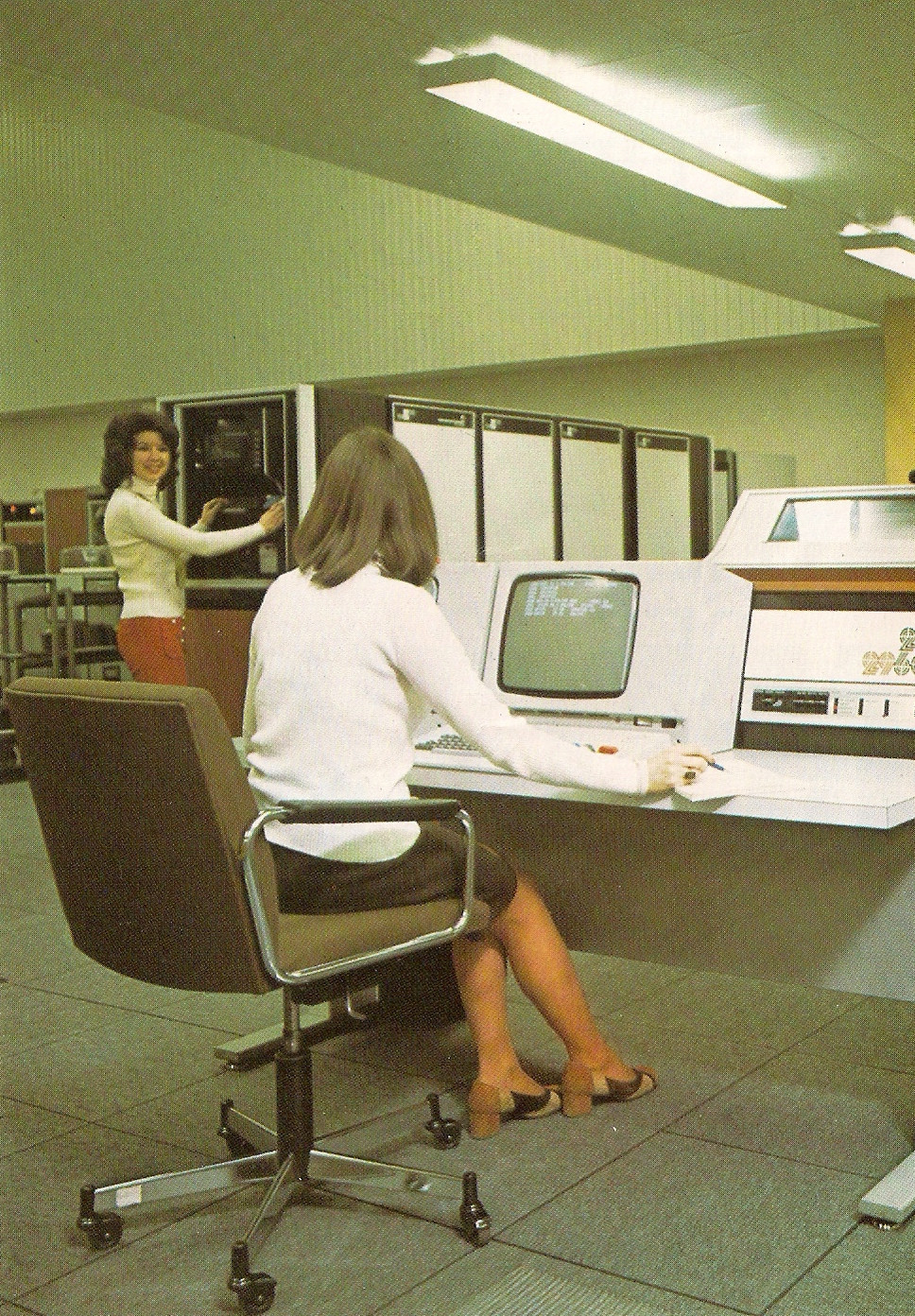
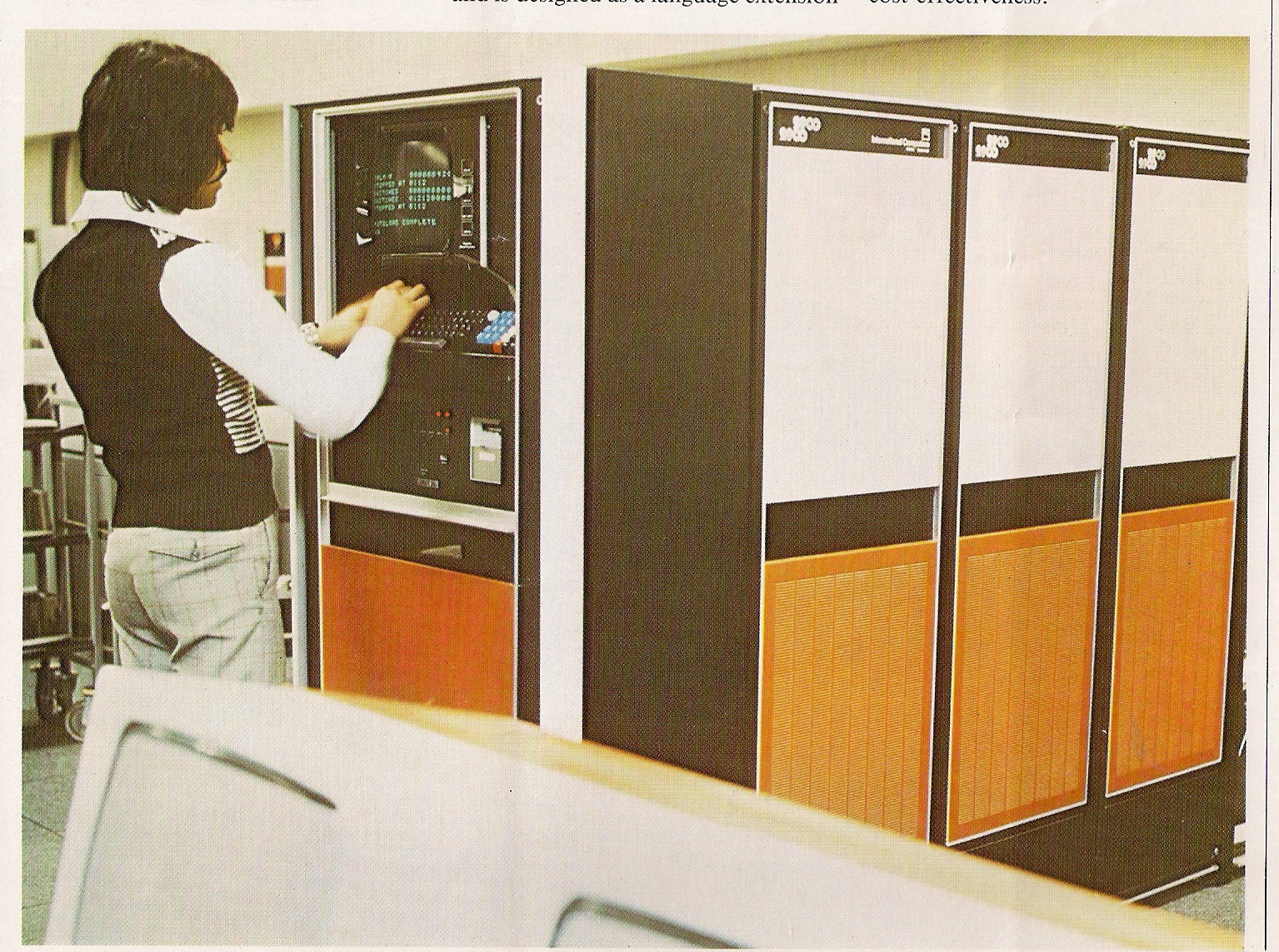
This shows a 2960 ECP in use. The screen was relatively small (note the font size, capitals only). The white rectangle on the right, below the keyboard, includes a Compact Cassette drive; this was used for loading microcode and test programs.
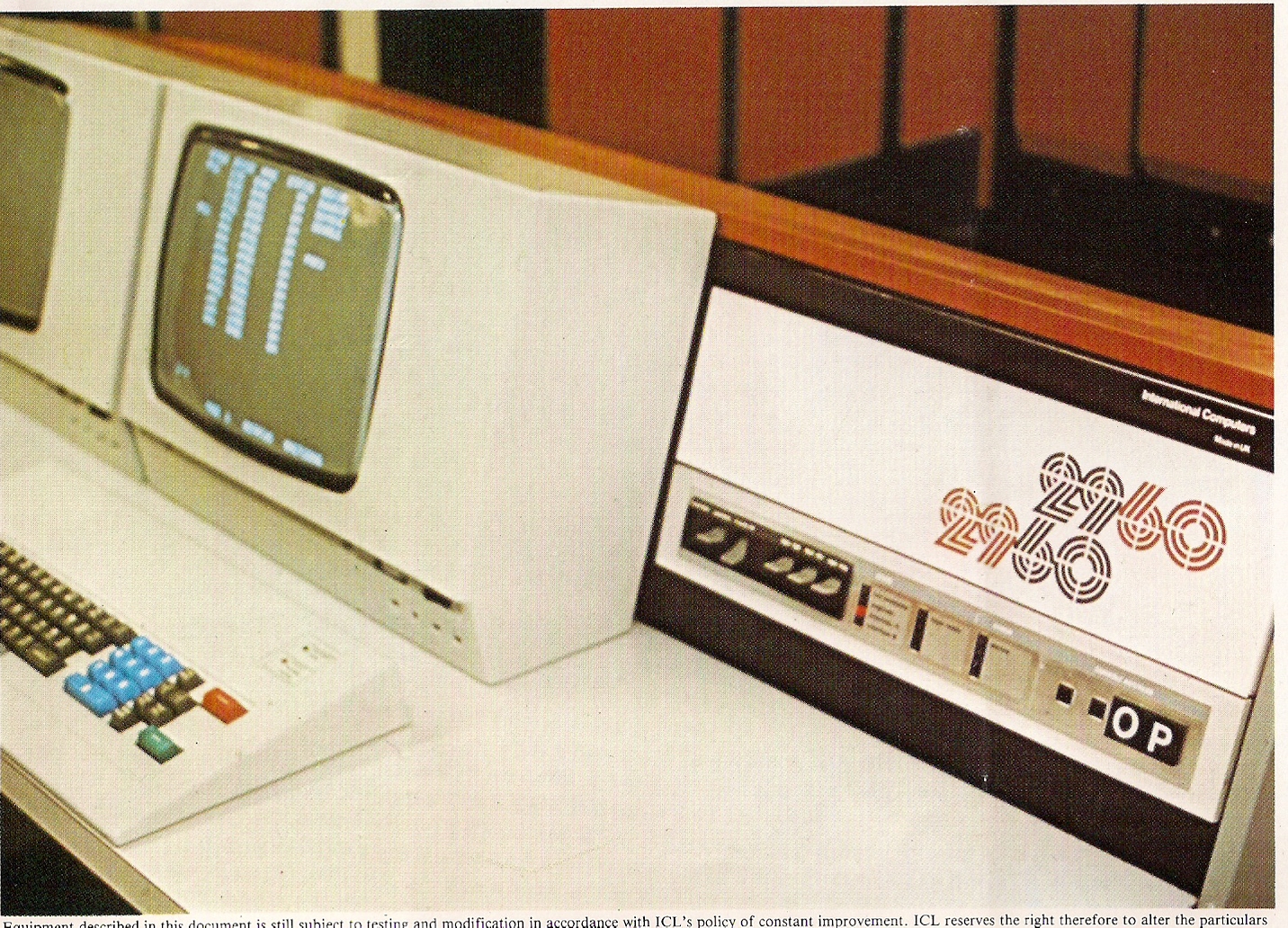
This shows a 2960 OPER station. This has two screens, 40 characters wide and 25 lines high. The red key on the keyboard is marked Command, and was used for initiating input. The green key is Enter, used for sending the input.
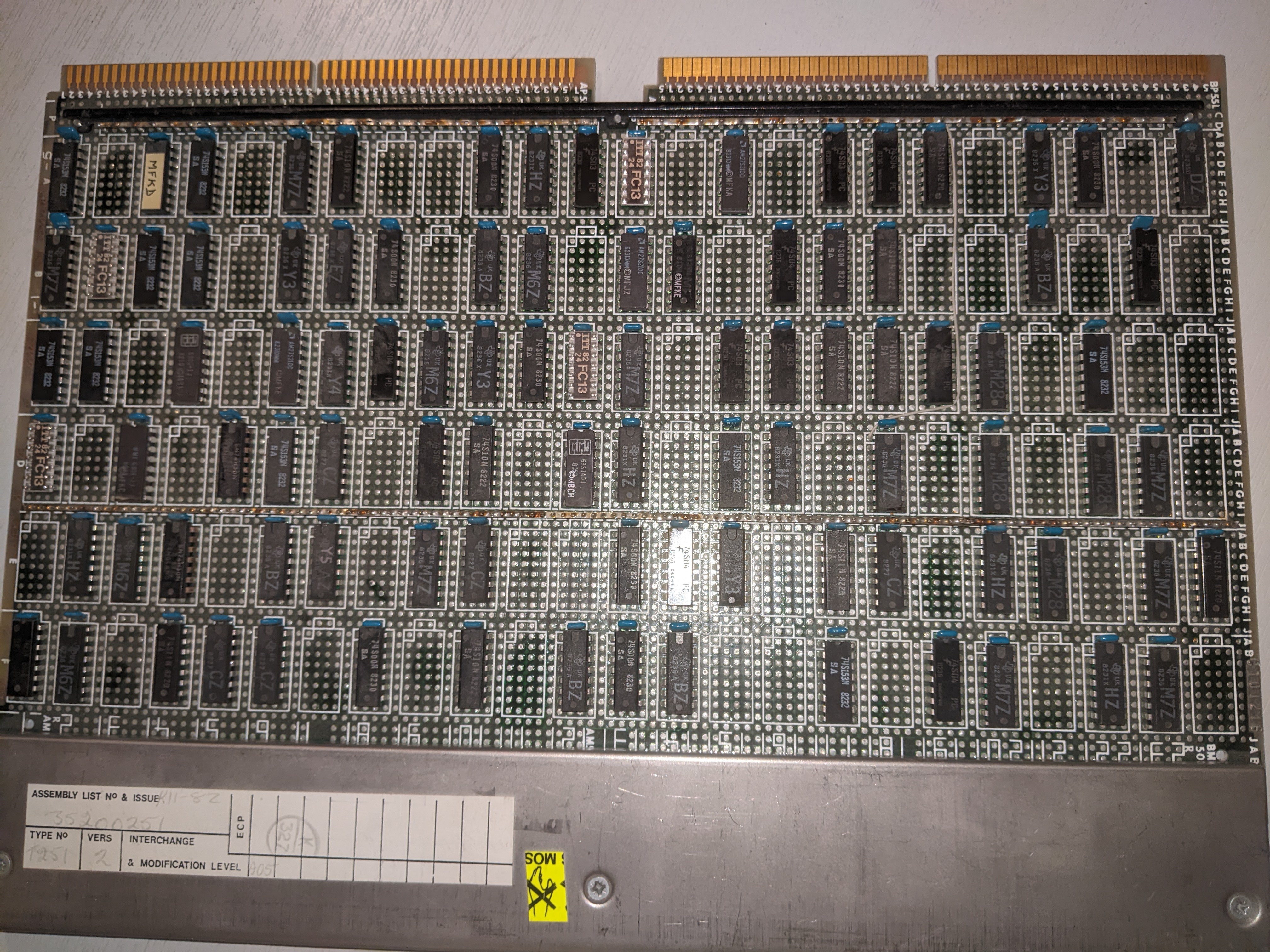
This is a front view of a circuit board (known to engineers as a macro) from a 2960 OCP. Specifically, it is a T251 board, which was a "personality" board for the target architecture (rather than for emulating another machine).
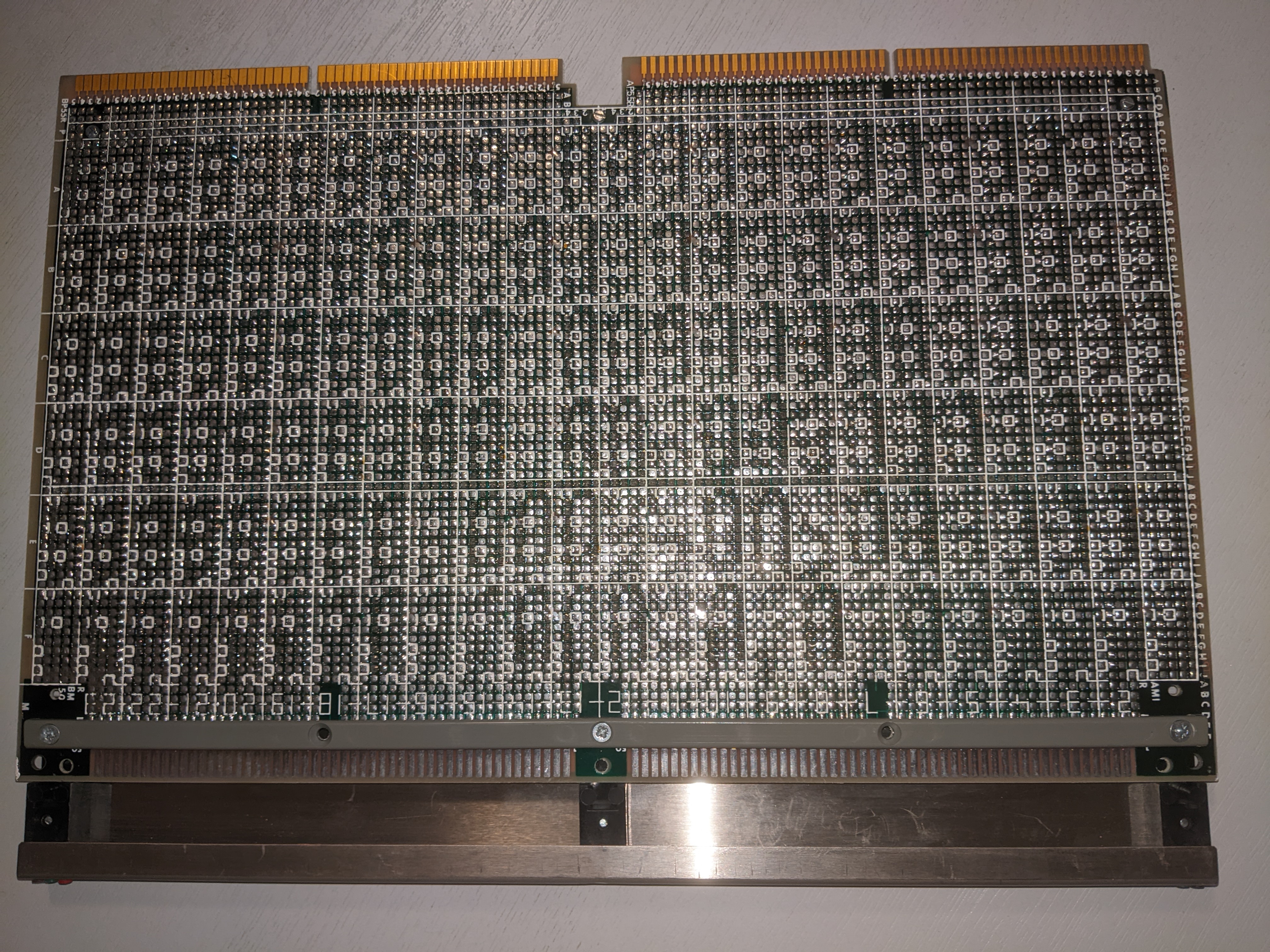
This is a back view of a circuit board (known to engineers as a macro) from a 2960 OCP. Specifically, it is a T251 board, which was a "personality" board for the target architecture (rather than for emulating another machine).
2970
The 2970 (also known internally as the P3) was a P-series machine, and the first microcoded 2900 system announced. Notably, the microcode was overlaid, with the "backing store" being main memory.
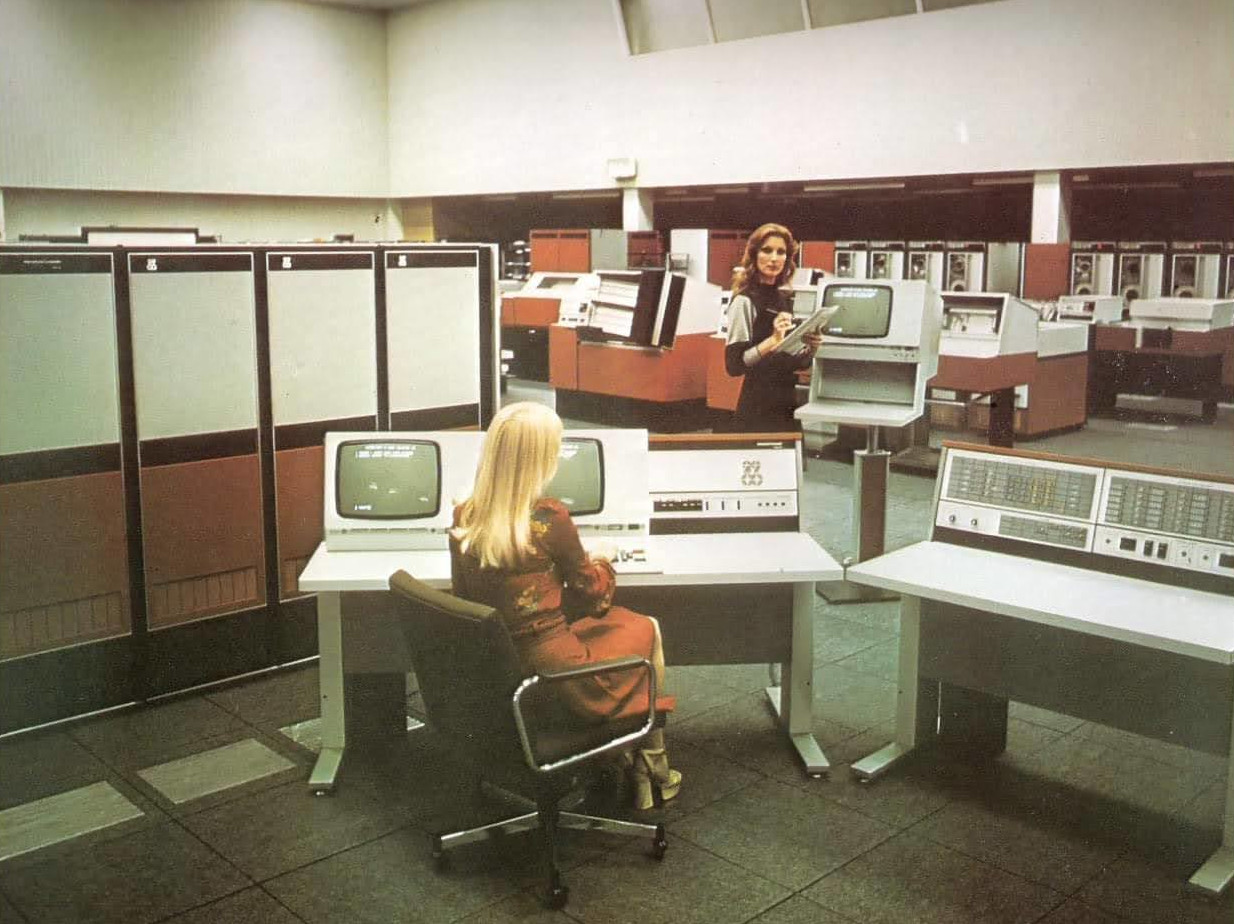
This is an overview of a 2970 system. In the foreground is a two-screen OPER, with a single screen behind it on a pedestal. The OCP and SMAC are to the left. Further back can be seen a card reader and paper tape station. Behind that are a number of tape drives, with a printer at far left.
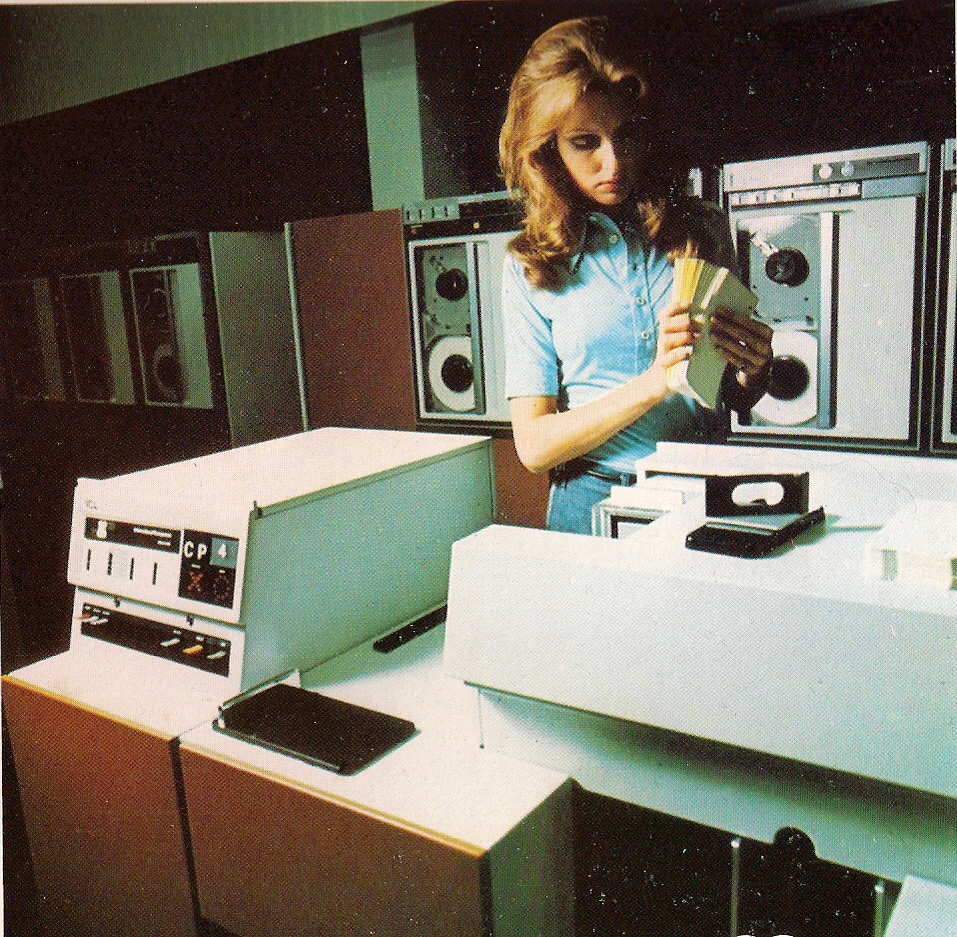
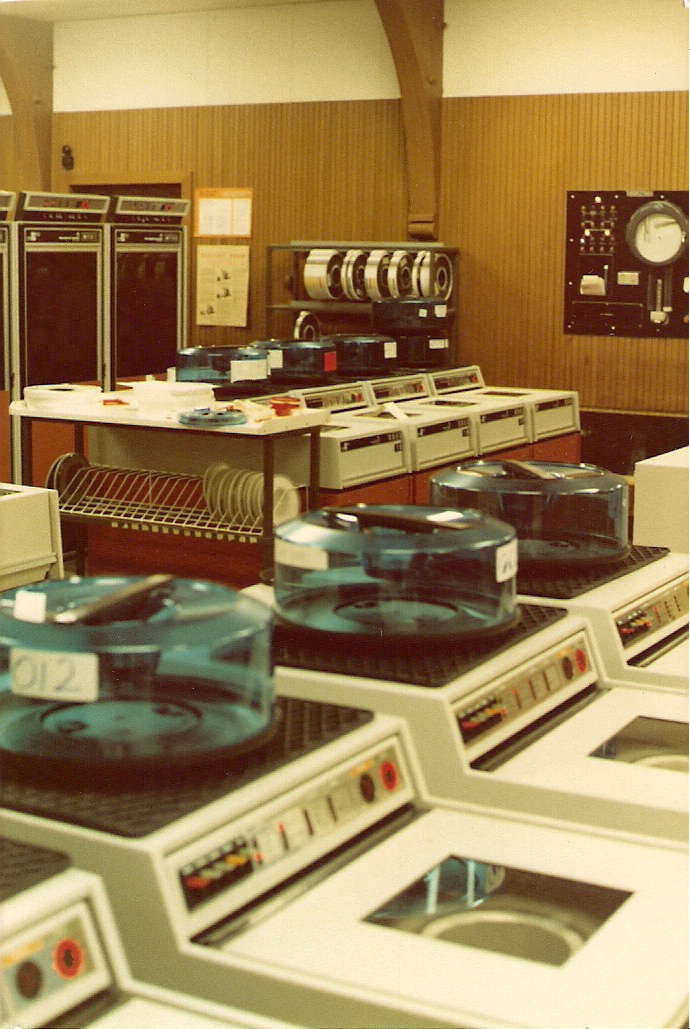
Some 2970 EDS200 disk drives.
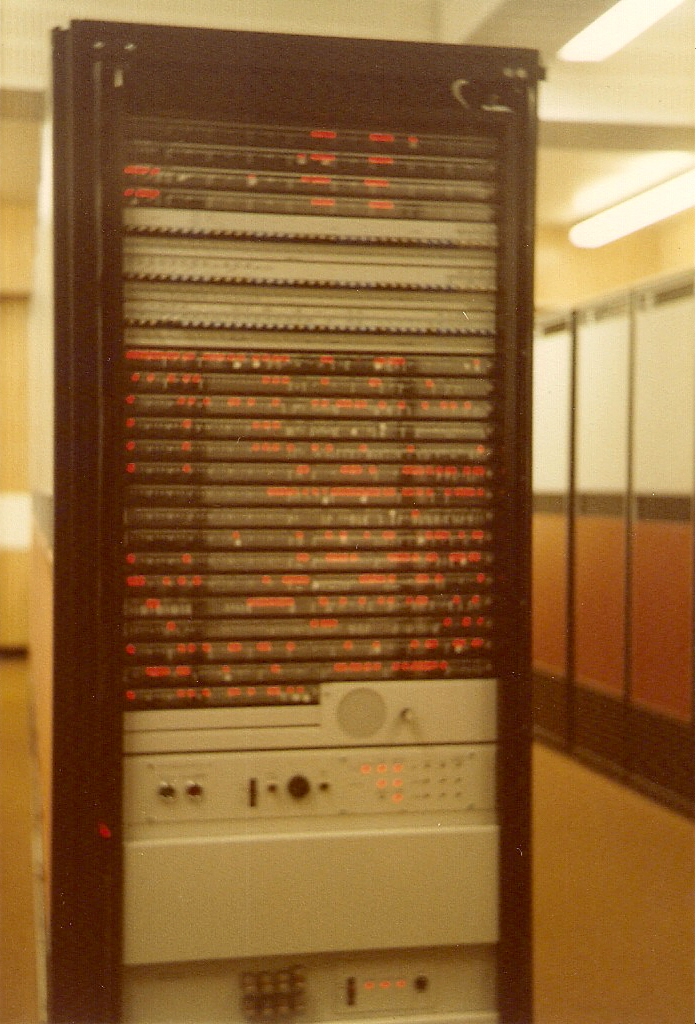
View of a 2970 engineer's panel.
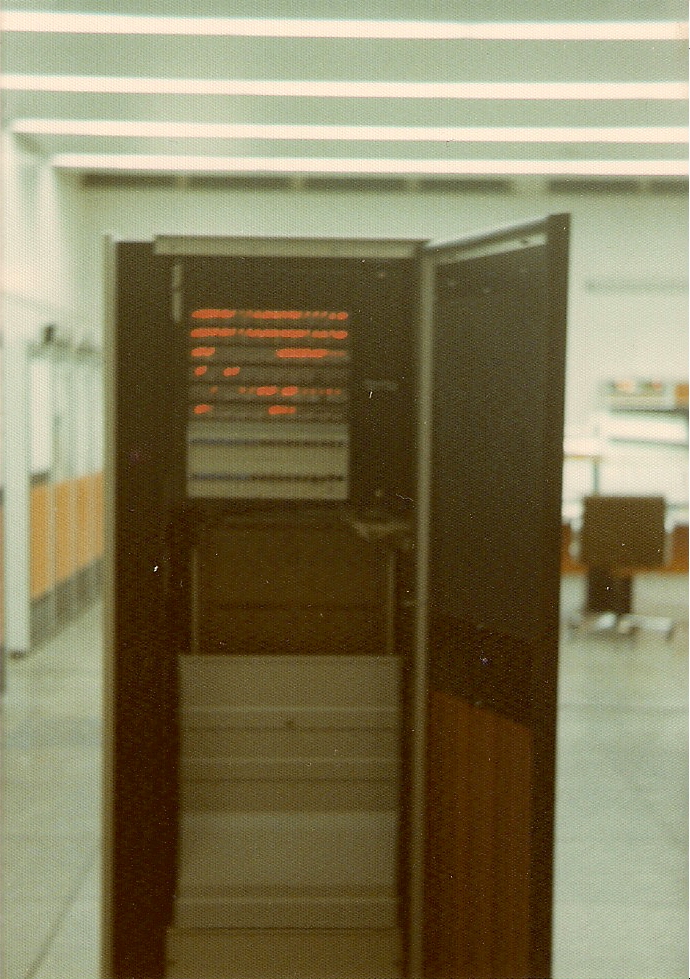
2980
The 2980 (also known internally as the P4) was a P-series machine, and was not microcoded. It was the most poswerful machine in the initial announcements of P2, P3 and P4.
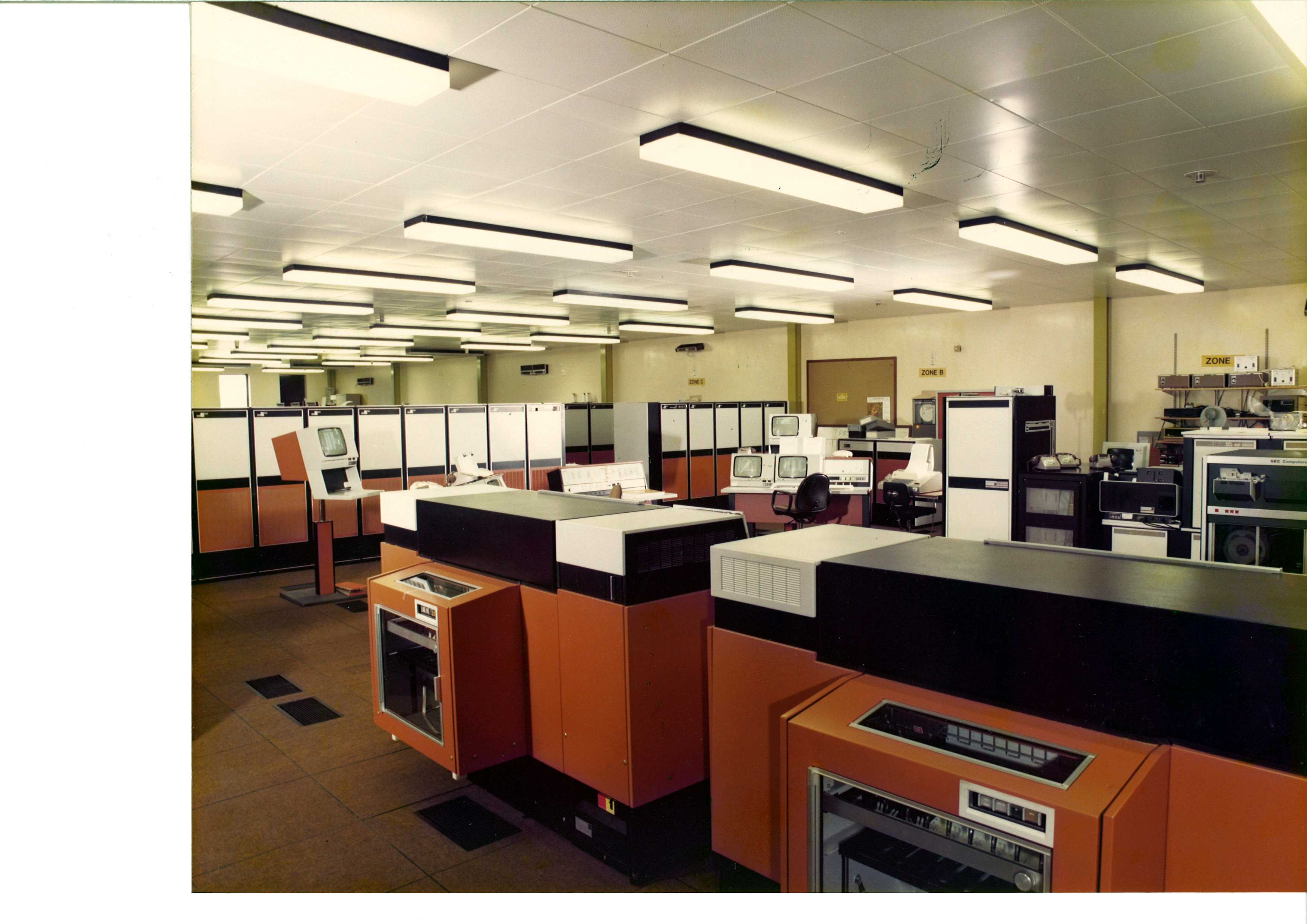
There is a lot to see here! Two high speed printers (LP4B) in the foreground, with the OCP, memory, etc. behind and to the left. Two two-screen OPERs (one barely visible, but see next picture) and two one-screen OPERs. At the back, near the door, is what is probably a GPC.
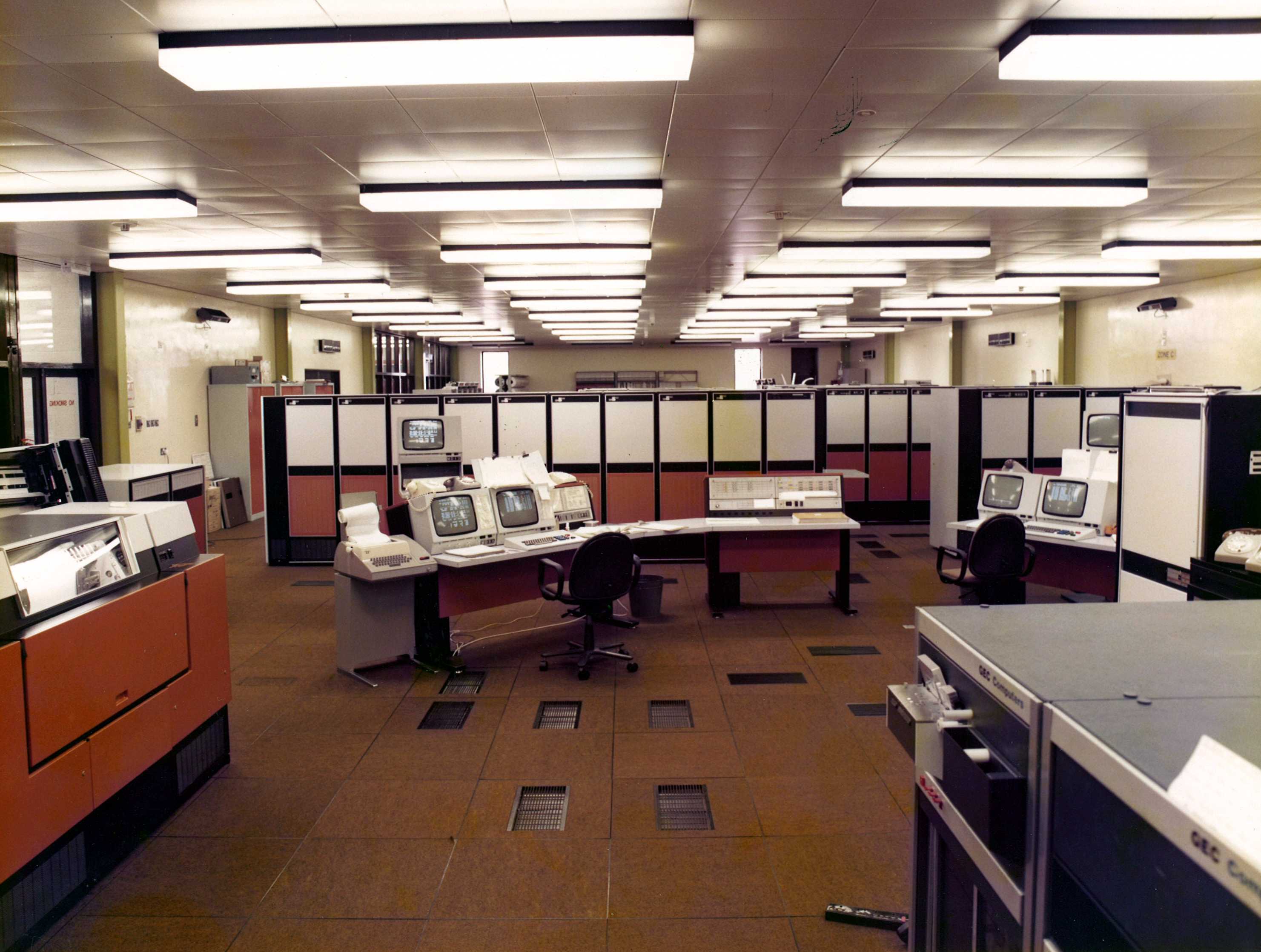
This is the same system as in the previous picture, but from a different angle.
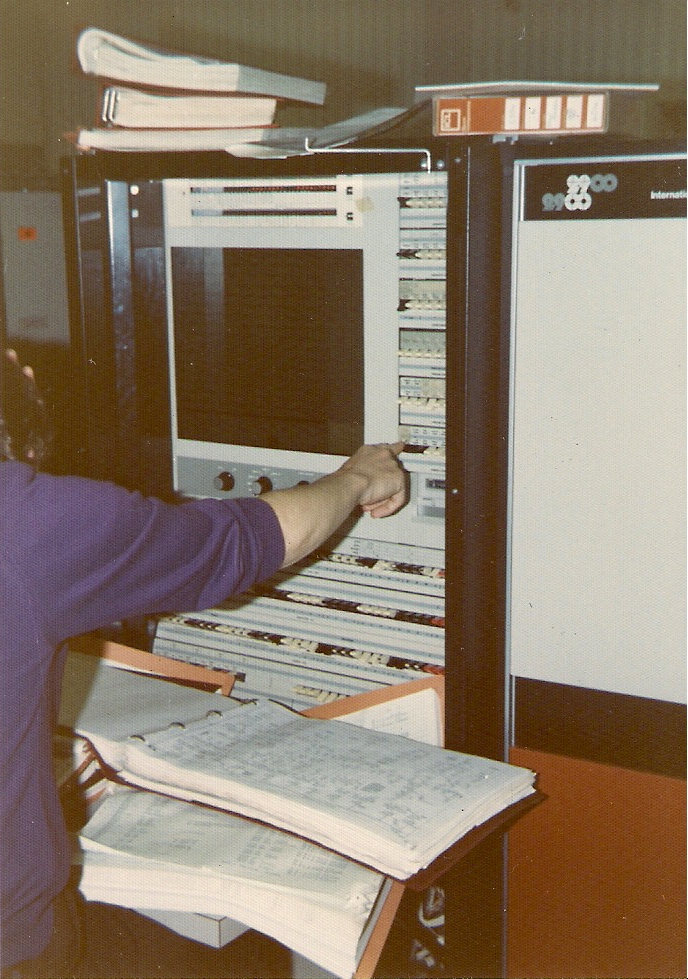
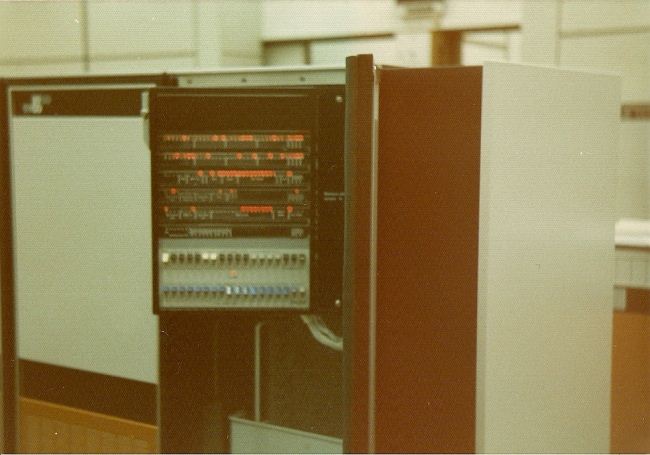
This is a good image of the engineer's control panel. The screen had indicator lights behind it, with movable transparencies in front that were changed by rotating a knob; that also changed the function of the indicators.
2966
The 2966 was an S-series machine, microcoded.